
Know Your Rights Taking Photos/Video of Police, ICE, and National Guard
Last updated: January 21, 2026 04:57 pm
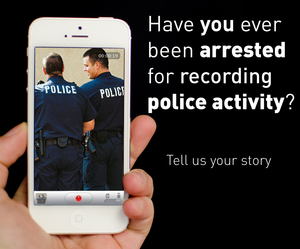
You have a right to take photos and videos of police and other government actors doing their job in public and in plain sight.
Unfortunately, law enforcement officers often order people to stop taking photos or video in public places, and sometimes harass, detain or arrest people who do so.
This guide explains your rights and best practices.
Here are some important things to keep in mind:
- Turn off fingerprint and facial recognition on your phone to prevent law enforcement from accessing photos and videos you’ve taken. Officers cannot force you to reveal your phone’s passcode–even with a warrant.
- Law enforcement officers aren’t allowed to order you to stop taking photos or videos of them while they’re doing their job in public unless you are interfering with law enforcement operations
- Officers may not confiscate or demand to view your photographs or video without a warrant or delete data under any circumstances.
- If the officer says they will arrest you if you continue to use your camera, in most cases, it’s better to put the camera away rather than risk arrest— or worse.
- Private property owners can prohibit photography and video-recording on their property. If you record on private property without the owner’s permission, you can be arrested for trespassing.
- The government can prohibit photography and video-recording in courthouses and non-public spaces of government buildings.
A Note About Rights
Even if you know and exercise your constitutional rights, police officers or ICE might not honor them. It is never good to use force or physically resist police officers or ICE, even when you know they are wrong. Challenging misconduct cannot be done in the moment. It can only be done through legal and advocacy efforts afterwards.
If you think police or ICE have violated your rights, write everything down as soon as possible, including any identifying information about the officers and their vehicles. If the police or ICE stop you in violation of your rights, tell your lawyer. They may be able to use what happened to you in a defense against your deportation in immigration court. If injured, seek medical attention and take photos.
If you believe that your rights have been violated, please contact the ACLU of Pennsylvania: https://complaints.aclupa.org
Documents
Stay Informed
Sign up to be the first to hear about how to take action.
By completing this form, I agree to receive occasional emails per the terms of the ACLU’s privacy statement.
By completing this form, I agree to receive occasional emails per the terms of the ACLU’s privacy statement.