Pennsylvania Counties' Notice-and-Cure Policies
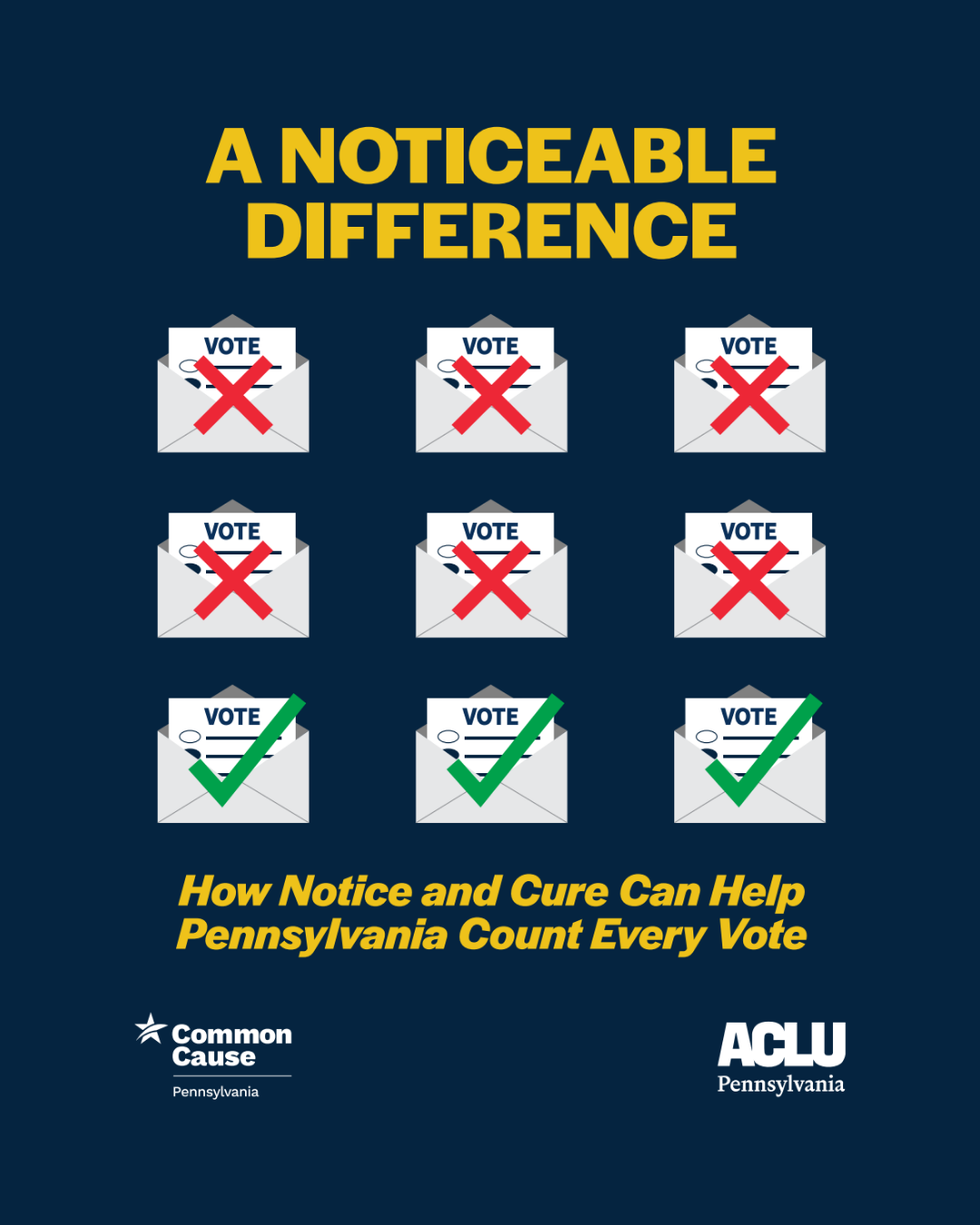
“Notice and cure” is when election offices notify voters about mistakes on their mail-in ballots (notice) and let them fix those errors before polls close on Election Day (cure). Most counties offer both notice and cure, and some counties only notify so that people can at least vote a provisional ballot on Election Day. A few counties do neither.
Following the 2025 Pennsylvania Supreme Court decision in the Center for Coalfield Justice v. Washington County Board of Elections, voters are entitled to notice from counties if their mail-in ballot will not be counted. Even in counties that do not provide additional curing options, notice must be given in time for voters to have a meaningful chance to preserve their vote by casting a provisional ballot on Election Day.
The ACLU of Pennsylvania expects that all counties should, at a minimum, ensure that notice is provided via the Pennsylvania Statewide Uniform Registry of Elections (SURE) system, allowing voters to track the status of their ballot.
To help voters better understand how their county handles the “notice and cure” process, we created the map tool below. Through Right-To-Know requests in 2024 and 2026, analysis of SURE system data, and outreach to counties, the ACLU of Pennsylvania compiled the "notice and cure" policies of the commonwealth's 67 counties.
Overall, the vast majority of counties are doing the right thing by their voters!
- 60 counties now give notice to their voters if a mistake is made on the mail-in ballot packet.
- 41 counties in Pennsylvania, including counties that lean both Democratic and Republican, give notice AND allow “curing” of disqualifying mail ballot mistakes prior to Election Day.
- 19 counties give notice to their voters and direct them to vote by provisional ballot at their polling place on Election Day to preserve their vote.
Unfortunately, as of June 16, 2026, four counties appear not to be in compliance with the Pennsylvania Supreme Court’s mandate to provide timely notice that honors the due process rights of Pennsylvania voters. The ACLU-PA will continue to fight to ensure the voters in these seven counties have their constitutional rights protected. This map tool will be updated as counties change their policies.
We welcome Pennsylvania voters to share information or problems with notice and cure practices in their counties.
Please email: vote@aclupa.org or fill out an intake form.
Related Issues
Related Content

How your county may - or may not - be helping you to vote
The Lawsuit to Protect Thousands of Pennsylvania Voters
What voters really want on immigration and public safety